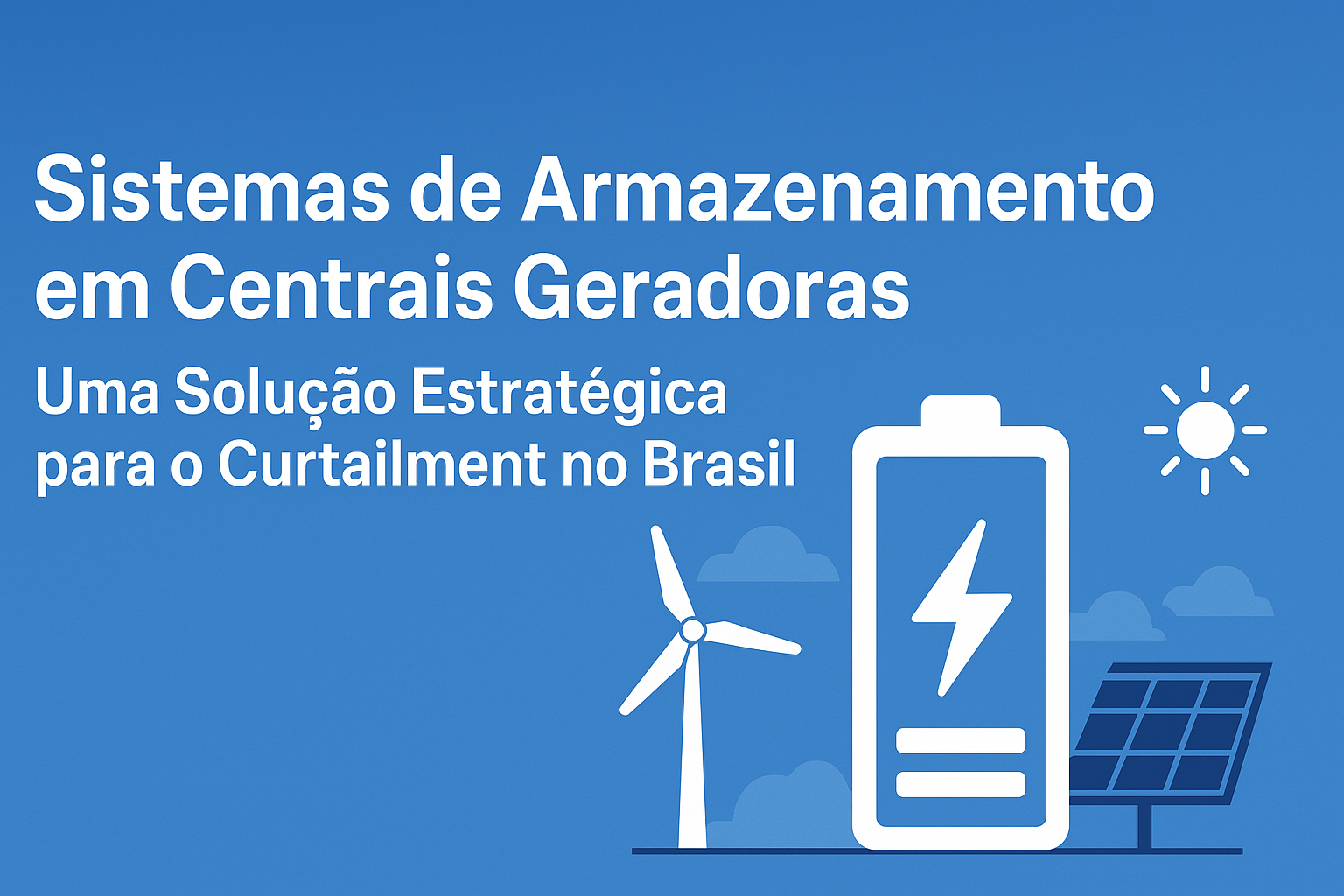
Energy Storage Systems at Generation Plants: The Strategic Solution for Curtailment in Brazil
Brazil's power sector faces an operational and financial paradox: as renewable generation keeps hitting records, energy waste is reaching alarming figures. In August 2025, the accumulated losses for generators facing compulsory generation cuts — known as curtailment — reached R$880 million. This scenario is the sharpest symptom of a structural shift in Brazil's National Interconnected System (SIN), which has moved from a grid historically dominated by predictable hydropower to an environment of high penetration from variable sources, demanding urgent operational flexibility.
The shift in the SIN's profile is fast and irreversible. The share of renewables in meeting demand jumped from under 7% in 2016 to 26% in 2024. By the end of that December, installed capacity totaled around 232 GW, with solar — combining centralized and distributed generation — accounting for 22.2% of the total and consolidating its position as the country's second-largest source. Projections from Brazil's National System Operator (ONS) indicate that by the end of 2029, solar plus distributed micro- and mini-generation (MMGD) will represent a third of all installed capacity, permanently changing the logic of how the grid is operated.
This massive expansion has flipped the nature of the system's constraints. According to ONS diagnostics, Brazil has stopped being an energy-constrained system — where the primary risk was a water-driven supply shortfall — and become a power-constrained one. Today there's an abundance of energy resources, but not enough "muscle" to respond instantly to sharp swings in load and generation. The intermittency of renewable sources forces dispatchable sources, like hydro and thermal plants, into steep operating ramps to keep the system balanced, putting pressure on operational security.
The direct consequence of this lack of flexibility is an explosion in curtailment. When generation exceeds demand or the transmission lines' evacuation capacity, the operator is forced to cut clean production. Data from consultancy Volt Robotics shows the scale of the problem: between January and August 2025, cuts totaled an average of 987 MW, equivalent to 17.2% of the potential output of the affected plants. That volume represents a 230% increase over the same period the previous year, showing that transmission infrastructure isn't keeping pace with generation growth.
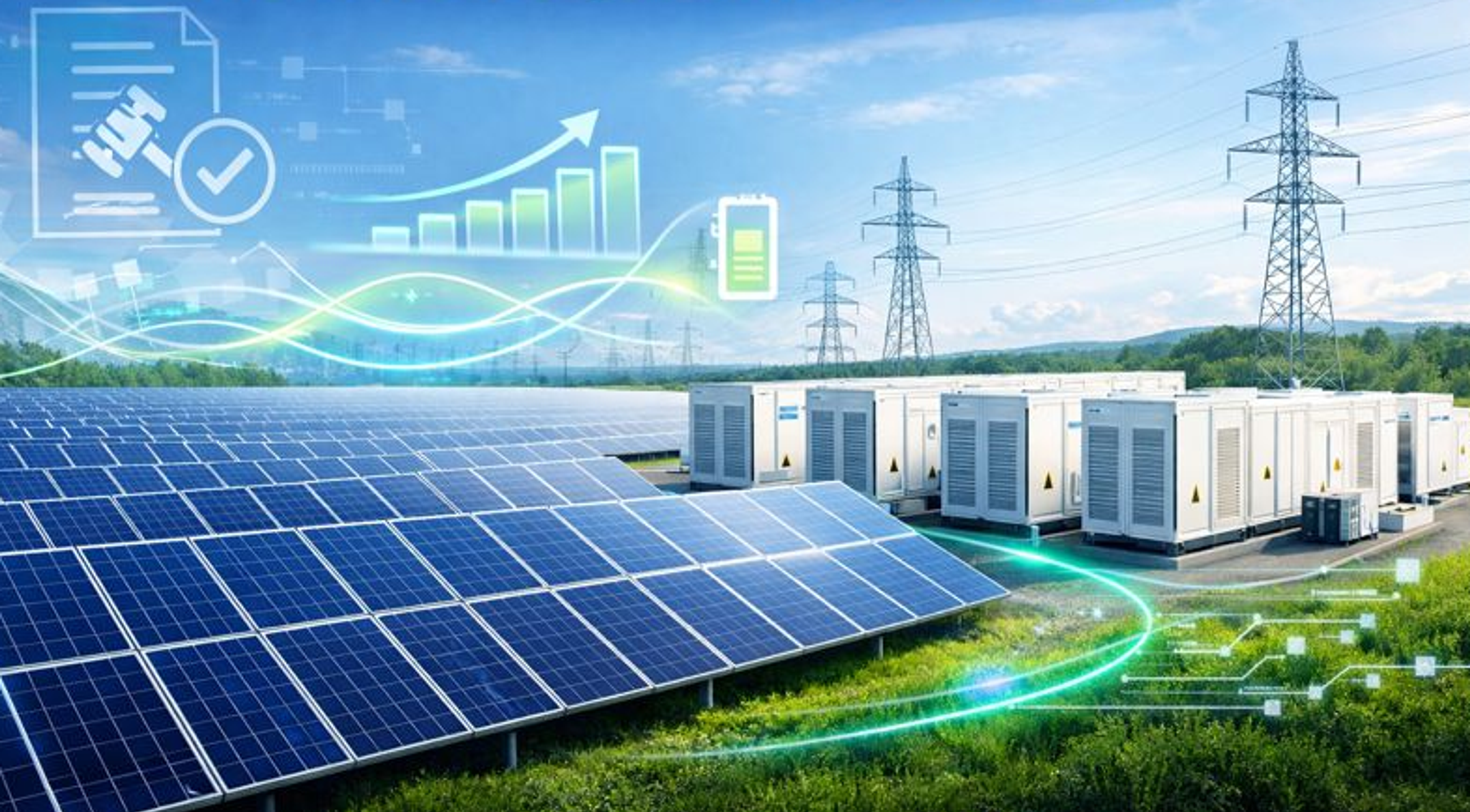
Given that it's neither economically nor practically feasible to solve this bottleneck with new transmission lines alone, the technical solution converges on Battery Energy Storage Systems (BESS). In response, Brazil's National Electric Energy Agency (ANEEL) established procedural guidelines for granting generation licenses with associated storage, creating a regulatory path for hybrid plants. That signal provides the legal certainty needed for projects that turn energy that would otherwise be wasted into a dispatchable asset — mitigating losses for generators and giving the operator back the controllability the system's stability requires.
STEMIS Grid: An Integrated Platform for the Hybrid System Lifecycle
The technical and economic viability of projects combining renewable generation and storage systems depends on optimization and control tools. STEMIS's Grid line covers the full lifecycle of a hybrid system, from sizing through to operation and monitoring.
The line is made up of three integrated products:
• Grid Design (sizing)
Runs the technical-economic optimization of the project at the conception stage to define the highest-return architecture, mitigating investment risk.
• Grid Control (EMS — energy management)
Acts as the plant's operational brain, running optimal, automatic dispatch of assets to keep operation efficient and secure.
• Grid Monitor (monitoring)
Operates as an advanced cloud monitoring interface, providing full operational visibility and predictive analytics for smarter maintenance.
Together, STEMIS's Grid line gives generators affected by curtailment the tools they need to develop and operate energy storage projects — turning surplus generation into new revenue and boosting the efficiency of their assets.
References
- Operador Nacional do Sistema Elétrico (ONS). Executive summary — assessment of electro-energy conditions for medium-term operation planning. ONS, January 2024.
- MegaWhat Editorial Team. Renewable generators lost R$880 million to curtailment, Volt Robotics reports. May 2025.
- Agência Nacional de Energia Elétrica (ANEEL). Electric energy storage systems (SAE) with generation plants. 2025.
- STEMIS. STEMIS Grid: the intelligent platform for hybrid microgrid sizing, dispatch, and monitoring.